You've tried stretching. You've adjusted your desk setup. Maybe you've even gone to physical therapy. But your neck pain keeps coming back—sometimes after a few hours at your computer, sometimes the moment you wake up.
The frustration isn't just the pain itself; it's not knowing exactly what's causing it or how to fix it permanently.
Here's the truth: "neck pain" is not one condition. It's a symptom of specific biomechanical dysfunctions, each with distinct causes and correction approaches. Treating neck pain generically is why most people see temporary relief but never achieve lasting results.
The problem isn't that you haven't tried hard enough. The problem is you've been treating "neck pain" instead of treating your specific postural condition causing the pain.
This assessment will identify exactly which dysfunction you have. Then you'll get the targeted correction protocol—not generic advice, but the specific approach your condition requires.
What This Assessment Provides:
Complete self-assessment to identify your specific neck pain condition. You'll discover which of three postural dysfunctions is causing your pain, get immediate relief protocols, and understand the systematic correction approach your condition requires.
Most people never identify their specific pattern—they just treat generic "neck pain" and wonder why nothing works permanently.
First, let's address your pain today. Then we'll identify your root cause.
Relief Today: Ice vs. Heat for Neck Pain
Before we identify your specific condition, here's how to manage your pain right now using proper thermal therapy.
CRITICAL RULE: Timing determines effectiveness
For acute flare-ups (pain started <48 hours ago):
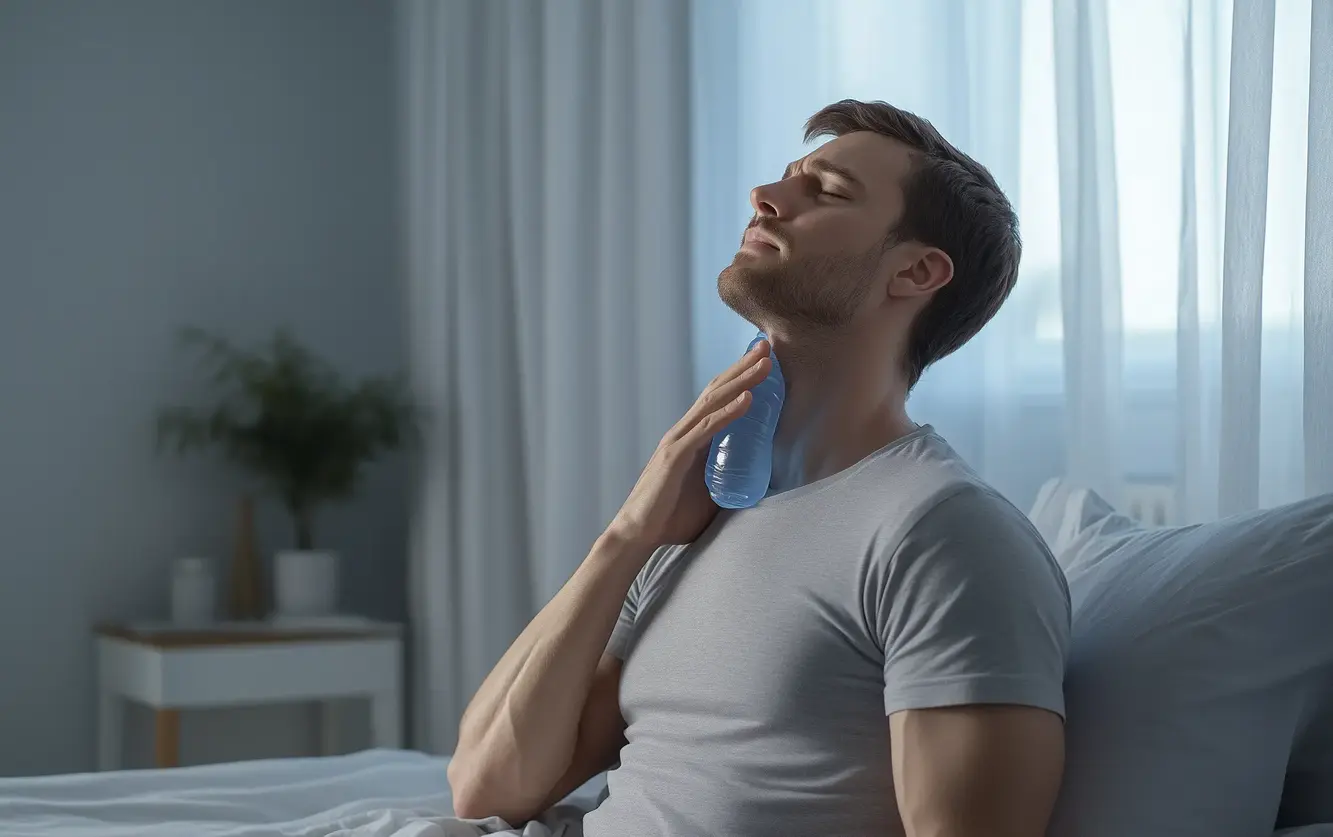
Use ice to reduce inflammation and numb pain:
- Apply ice pack for 15 minutes, remove for 45 minutes
- Repeat cycle 3-4 times daily for first 48 hours
- Use towel barrier (never ice directly on skin)
- Target: base of skull, upper trapezius, side of neck
Ice constricts blood vessels, reducing inflammatory chemicals at injury site. This decreases swelling and provides temporary numbness. Most effective in first 48-72 hours after acute onset.
For chronic tension (ongoing for weeks/months):
Use heat to increase blood flow and relax tight muscles:
- Apply heating pad for 15-20 minutes
- Safe temperature: warm, not burning hot
- Best timing: before bed or before corrective exercises
- Target: Same areas as ice
Heat dilates blood vessels, increasing oxygen and nutrient delivery to tight muscles. This helps break the pain-spasm cycle and prepares tissues for corrective exercise.

Common mistakes:
- Using heat on acute injury (worsens inflammation)
- Icing chronic tension (temporarily numbs but doesn't address tightness)
- Alternating ice and heat without understanding which phase you're in
Reality check: Ice and heat provide temporary 2-4 hour relief. They're excellent for managing symptoms while you identify and correct the root cause, but they won't fix the underlying postural dysfunction.
For permanent results, you need to know exactly which condition you have.
Find Your Specific Condition: Self-Assessment
Most chronic neck pain stems from one of three postural dysfunctions. Check which pattern matches your symptoms.
Pattern 1: Text Neck (Device-Related)
Check if you experience:
☐ Pain worsens specifically after looking at phone/tablet
☐ Neck pain during or immediately after computer work
☐ Pain improves when lying down
☐ Minimal pain in morning, progressively worsens through day
☐ No visible hump at base of neck
✓ If 4+ boxes checked: You likely have text neck
What this means:
Text neck develops from the specific angles and duration of device use. Your posture may be relatively normal when standing, but collapses forward the moment you pick up your phone or sit at a computer.
Pattern 2: Forward Head Posture (Structural)
Check if you experience:
☐ Head visibly forward in side-profile photos
☐ Upper back or shoulder blade pain
☐ Difficulty holding head upright for extended periods
☐ "Tech neck" appearance even when not using devices
☐ Wall test positive (head doesn't touch wall when back does)
✓ If 4+ boxes checked: You likely have forward head posture
What this means:
Forward head posture is a constant structural misalignment—your head sits 2-4 inches forward of your shoulders 24/7, not just during specific activities. This creates chronic muscle strain and reduced breathing capacity (20-30%).
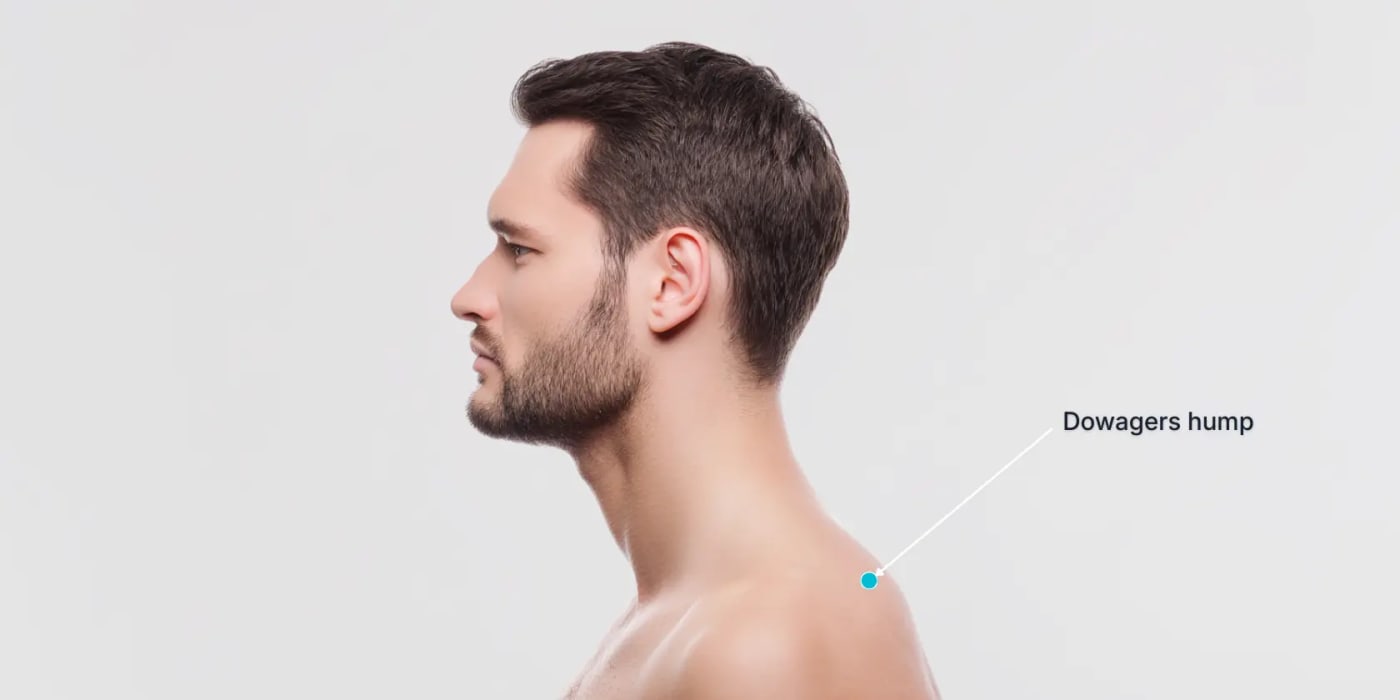
Pattern 3: Dowager's Hump (Advanced Kyphosis)
Check if you experience:
☐ Rounded upper back visible when wearing fitted clothing
☐ Difficulty lying flat on back
☐ Upper back stiffness or limited mobility
☐ Pain concentrated at top of shoulder blades
☐ Noticeable "hunchback" appearance
✓ If 4+ boxes checked: You likely have dowager's hump
What this means:
Dowager's hump is the visible rounded protrusion at C7-T1 vertebrae. Unlike text neck or FHP (primarily muscular), this involves actual tissue buildup and structural changes requiring longer correction protocols (8-16 weeks vs. 4-8 weeks).
If Multiple Patterns Match:
If you checked 4+ boxes in TWO categories, you likely have overlapping conditions. This is common with years of poor posture. Start with the one causing the most pain. Correcting one often improves the other as they share common postural compensations.
If None Match Clearly:
If symptoms don't clearly fit any pattern, or if you have numbness/tingling radiating past your elbow, see a healthcare provider. You may have cervical radiculopathy, herniated disc, or other condition requiring professional evaluation.
If You Have Text Neck: What You Need to Know
Text neck develops from prolonged device use—smartphones, tablets, laptops. The average person spends 5-7 hours daily looking down at devices, creating 60 degrees of neck flexion. At this angle, your neck supports 60 pounds instead of the normal 10-12 pounds.
Key difference:
Text neck is activity-triggered, not constant. Your posture may be fine standing, but collapses forward the moment you pick up your phone.
Why it matters:
This requires device-specific corrections—smartphone positioning, workstation ergonomics, screen height adjustments. General "improve your posture" advice won't fix the unique load pattern created by devices.
Complete protocol:
Device positioning for every situation, specific exercises targeting forward-gaze muscle imbalances, progressive strengthening protocols.
If You Have Forward Head Posture: What You Need to Know
Forward head posture (FHP) is a constant structural misalignment—your head sits 2-4 inches forward of your shoulders 24/7. This affects 66% of adults to varying degrees and creates chronic muscle strain, reduced breathing capacity (20-30%), and tension headaches.
Key difference:
Unlike text neck (activity-triggered), FHP is a persistent pattern your nervous system has accepted as "normal." You don't feel it's wrong until you see photos or perform the wall test.
Why it matters:
Correcting FHP requires retraining your nervous system's perception of "neutral"—not just exercises. You need specific assessment protocols, daily postural resets, and progressive strengthening.
Complete protocol:
Wall test assessment to measure severity, proprioceptive retraining techniques, systematic correction exercises.
If You Have Dowager's Hump: What You Need to Know
Dowager's hump is the visible rounded protrusion where your neck meets your upper back (C7-T1 vertebrae). Unlike text neck or FHP (primarily muscular), this involves actual tissue buildup—fat pad accumulation, fascial thickening, and potential vertebral wedging.
Key difference:
This indicates advanced kyphosis with structural changes. It's not just posture—it's your body's adaptation to years of forward head position, visible in mirrors and through clothing.
Why it matters:
Correction takes longer (8-16 weeks vs. 4-8 weeks) because you're addressing tissue remodeling, not just muscle retraining. You need specific upper back mobilization and thoracic extension work.
Complete protocol:
Thoracic mobility exercises, sleep position optimization (critical), driving posture corrections, tissue remodeling techniques.
Not Sure Which Type Applies to You?
Or ready for the complete systematic approach that addresses all three patterns with progressive strengthening, daily postural resets, and 8-week correction protocols? The complete assessment and correction system is designed to identify your exact dysfunction and provide the specific protocol your condition requires.
Ready to Fix Your Neck Pain Permanently?
If you have chronic recurring neck pain—or you're uncertain which specific dysfunction you have—you need to address the underlying postural dysfunction systematically.
The BaseHealthBlueprint Posture Reset Blueprint includes the complete protocol that addresses all three dysfunction types with an 8-week systematic approach. Whether you have text neck, forward head posture, or dowager's hump, the comprehensive protocol corrects all postural components.
See the Complete Solution Now →When Professional Evaluation Is Needed
See a healthcare provider if:
Within 48 hours:
- Pain started after trauma (car accident, fall, sports injury)
- Severe pain that doesn't improve with ice/rest
- Numbness, tingling, or weakness in arms
- Severe dizziness or vertigo with neck movement
Within 1 week:
- No improvement after 5-7 days of ice/heat protocols
- Pain progressively worsening despite treatment
- Unable to turn head more than 30-40 degrees either direction
- Headaches getting worse instead of better
Ongoing management:
- Pain returns within days of resolving
- Happening 4+ times per year
- Interfering with work, sleep, or daily activities
- Over-the-counter pain relief no longer effective
What to Expect
Physical therapist or chiropractor can provide:
- Manual therapy to release tight muscles
- Personalized exercise prescription
- Postural assessment and detailed measurements
- Ergonomic recommendations for work/home
However: Even with professional treatment, you'll need to address underlying posture patterns through systematic home protocols for lasting results.